Ground Beef Nutrition Facts: Ground beef gives your body protein, iron and vitamins. Pick lean types to eat less fat and stay healthy.
Stay tuned with us as we explore more about Ground Beef Nutrition Facts from health tips to tasty recipes. More helpful info is coming your way soon.
What Is Ground Beef?
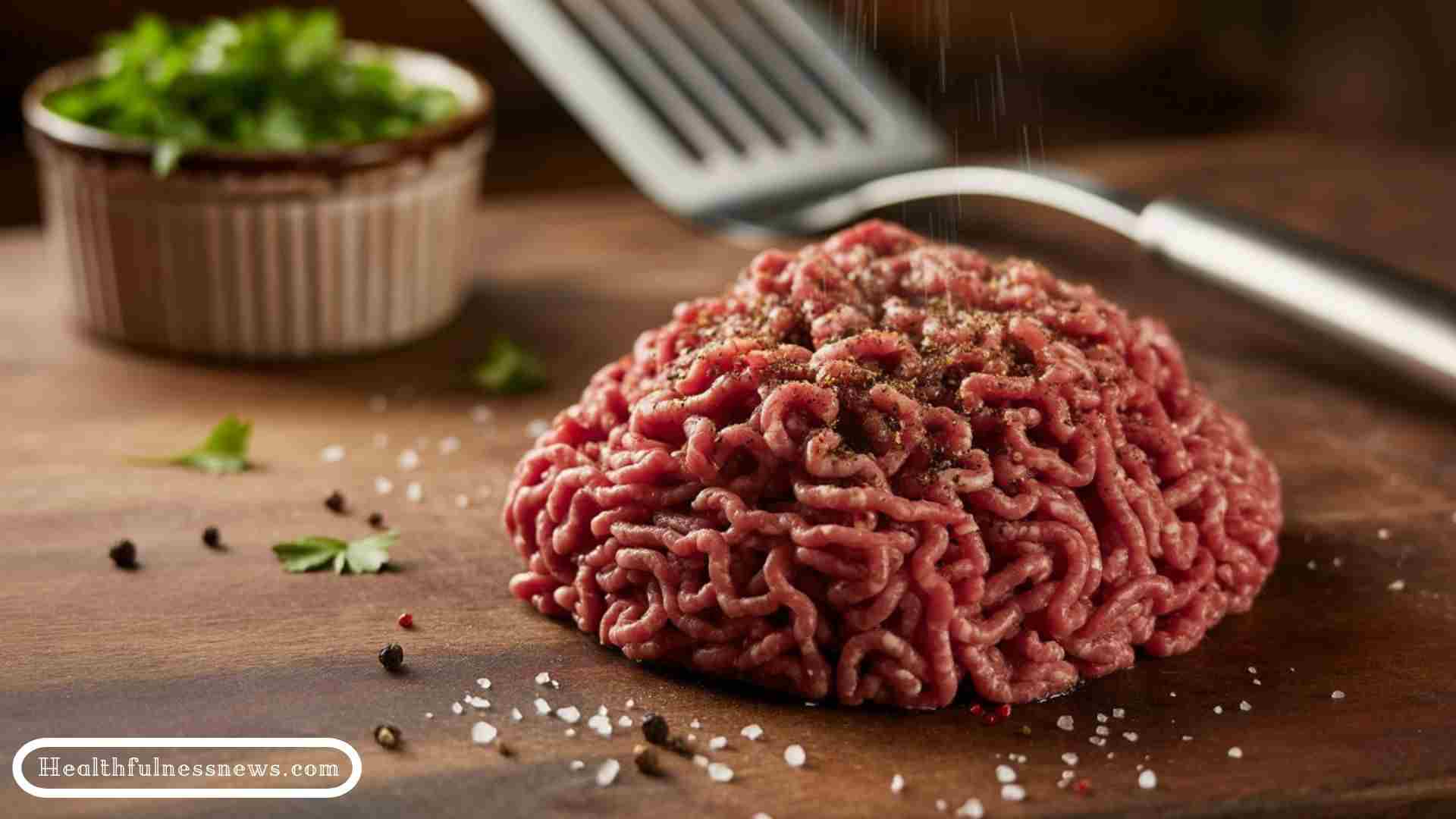
Ground beef is made by grinding up beef trimmings and meat cuts typically from the chuck, round or sirloin. It is available in different lean to fat ratios like:
- 70/30 (70% lean, 30% fat)
- 80/20 (80% lean, 20% fat)
- 90/10 (90% lean, 10% fat)
- 93/7 (extra lean)
These percentages affect the taste, fat content and overall nutritional value.
Ground Beef Nutrition Facts (Per 100 Grams)
Here is a quick breakdown of the average nutritional values for 80/20 ground beef (cooked pan browned):
| Nutrient | Amount |
| Calories | 254 kcal |
| Protein | 25.9 grams |
| Total Fat | 17.2 grams |
| Saturated Fat | 6.8 grams |
| Cholesterol | 80 mg |
| Iron | 2.3 mg (13% DV) |
| Vitamin B12 | 2.5 mcg (104% DV) |
| Zinc | 5.1 mg (46% DV) |
| Sodium | 72 mg |
Note: Values can vary based on fat content and cooking method.
Nutritional Value of Ground Beef (Based on Cooking Method)

Cooking can impact nutritional values. Here is a quick comparison of 80/20 ground beef prepared in different ways (100g cooked portions):
| Cooking Method | Calories | Protein | Fat | Notes |
| Pan-fried (drained) | 250 kcal | 26g | 16g | Draining reduces fat significantly |
| Grilled | 240 kcal | 26g | 14g | Fat drips away |
| Baked | 255 kcal | 25g | 17g | Slightly higher fat retention |
| Boiled | 230 kcal | 24g | 12g | Lower fat, softer texture |
Pro Tip: Always drain and blot cooked ground beef to reduce calories and fat without sacrificing flavor.
Fresh vs. Frozen vs. Processed Ground Beef

Let’s compare these three types based on health and nutritional differences:
| Type | Nutritional Quality | Sodium | Preservatives |
| Fresh Ground Beef | Highest | Low (~70mg) | None |
| Frozen Ground Beef | Good | Low to Moderate | Minimal (if plain) |
| Processed (pre-made patties, beef crumbles) | Lower (often includes additives) | High (300–500mg) | Yes (sodium nitrate, etc.) |
Tip: Choose fresh or frozen ground beef without additives for the healthiest choice.
Calories in Ground Beef (Based on Fat Percentage)
The fat content plays a big role in the number of calories in your ground beef:
- 70/30 Ground Beef: 332 calories per 100g
- 80/20 Ground Beef: 254 calories per 100g
- 90/10 Ground Beef: 196 calories per 100g
- 93/7 Ground Beef: 176 calories per 100g
So, the leaner the beef, the fewer calories and fat you are consuming.
Important Vitamins and Minerals
Ground beef contains several vital nutrients especially:
- Iron: Helps carry oxygen in the blood vital for energy
- Vitamin B12: Essential for nerve function and red blood cells
- Zinc: Boosts immunity and supports metabolism
- Niacin (Vitamin B3): Supports digestion and brain health
These nutrients are mostly found in animal based foods making ground beef an important source especially for people who do not eat a lot of other meats.
Ground Beef for Muscle Building
For those focused on muscle gain and fitness ground beef is a fantastic protein source due to:
- High bioavailable protein: 25 to 30g per serving
- Creatine: Helps improve performance in strength training
- B Vitamins & Zinc: Aid in energy metabolism and recovery
Try lean beef mixed with quinoa or brown rice post workout for a muscle friendly meal.
Is Ground Beef Healthy for Kids?
Yes in moderation. Ground beef provides:
- Iron & B12: Essential for brain development and energy
- Protein: Crucial for growth
- Zinc: Supports immune function
For kids, go with 90/10 lean beef and avoid overly salty or spicy sauces.
Ground Beef and Heart Health: What You Should Know?
While ground beef is nutritious. It can be high in saturated fats especially in higher fat blends like 70/30 or 80/20. Eating too much saturated fat may raise your LDL cholesterol (the bad kind) which can increase your risk of heart disease.
Tip:
To make your meals healthier:
- Choose 90/10 or 93/7 lean ground beef
- Drain and blot fat after cooking
- Combine with heart-healthy ingredients like veggies and whole grains.
Is Ground Beef Good for Weight Loss?
Yes but with a catch.
Lean ground beef is high in protein and can help you feel full and satisfied which is great for weight control. But watch out for:
- Portion sizes
- Added ingredients (cheese, oils, creamy sauces)
Stick to lean cuts, cook them healthily and pair them with veggies for a balanced, weight friendly meal.
Ground Beef vs. Other Proteins
Here is how 100g of cooked ground beef (80/20) compares to other proteins:
| Protein Source | Calories | Protein | Fat |
| Ground Beef (80/20) | 254 | 25.9g | 17.2g |
| Chicken Breast | 165 | 31g | 3.6g |
| Salmon | 206 | 22g | 12g |
| Tofu (firm) | 144 | 15g | 8g |
Ground beef holds up well in terms of protein but is higher in fat compared to chicken or tofu. Choose lean ground beef for a lower fat option.
Smart Ways to Add Ground Beef to Your Diet
If you want the taste of beef without overdoing calories or saturated fat try these tips:
- Use it in lettuce wraps instead of buns
- Mix it with beans or lentils to cut calories and add fiber
- Choose grass-fed beef which is often leaner and richer in omega-3s
- Use herbs and spices instead of extra salt or fat for flavor
Common Ground Beef Myths (Busted!)
Let’s clear up a few popular misunderstandings:
Myth #1: Ground beef is unhealthy
Truth: Lean ground beef cooked properly is rich in nutrients and can be part of a heart healthy diet.
Myth #2: Ground turkey is always better
Truth: Lean ground beef has more iron and vitamin B12 than turkey. Both are healthy when lean.
Myth #3: Ground beef causes cancer
Truth: It is processed red meats (like hot dogs, sausages, and deli meats) that are linked with cancer risk, not fresh ground beef.
Tips for Safe Handling and Cooking
To keep ground beef safe and avoid foodborne illness follow these best practices:
- Cook to 160°F (71°C) Use a food thermometer to ensure safety
- Store below 40°F in the fridge and use within 1–2 days
- Freeze for up to 3 to 4 months
- Thaw in the fridge, not on the counter
- Wash hands, surfaces and utensils after handling raw meat
Undercooked ground beef can carry E. coli, so never eat it rare.
Delicious & Nutritious Recipes with Ground Beef
Here are some healthy family friendly ideas:
Ground Beef Lettuce Wraps
Lean beef, garlic, ginger, soy sauce and veggies in lettuce cups
Beef & Bean Tacos
Half ground beef, half black beans in whole-wheat tortillas
Stuffed Bell Peppers
Lean beef, quinoa, tomatoes, and herbs stuffed in peppers
One-Pot Beef and Veggie Soup
Comfort food loaded with carrots, potatoes, peas, and beef
Tip: These meals keep calories in check while boosting nutrition.
FAQ’s
1. What is the nutritional value of 100g of ground beef?
100g of cooked ground beef (80/20) gives you about:
- 254 calories
- 26g protein
- 17g fat
- 0g carbs
It also has iron, zinc and vitamin B12.
2. Is ground beef healthy or unhealthy?
Ground beef can be healthy in moderation especially if you choose lean cuts (like 90/10). It is rich in protein, iron and B12 but too much fatty beef may raise cholesterol.
3. What is the nutrition of ground beef?
Ground beef is high in protein, contains healthy vitamins like B12, iron and zinc and has fats (some saturated). The exact values depend on how lean it is and how it is cooked.
4. What is the nutritional value of 200g of ground beef?
200g of cooked ground beef (80/20) gives you around:
- 508 calories
- 52g protein
- 34g fat
- 0g carbs
That is double the nutrients of a 100g serving.
5. Is 200g of beef a day too much?
Not always. For active people, it may be fine. But eating 200g of beef daily may be too much for heart health if it is high in fat. Balance with other protein sources.
6. How much protein is in 100 grams of minced beef?
In 100 grams of cooked minced beef (80/20) there is about 26 grams of protein.
Conclusion:
Ground beef is tasty, full of protein and packed with important nutrients like iron and vitamin B12. When you choose lean cuts and cook it in a healthy way. It can be part of a balanced diet. Enjoy it in smart portions and mix with veggies for better health.