The Honey Nutritional Information Label shows key facts like calories, sugar content and vitamins per serving. It helps you understand honey’s health benefits and make smarter choices.
Stay tuned with us. We will talk more about the Honey Nutritional Information Label in simple words so you can understand what is really inside your honey and how it helps your health.
What Is Honey Made Of?
Honey is a natural substance made by bees using the nectar of flowers. It contains a mix of:
- Natural sugars (mainly fructose and glucose)
- Water
- Small amounts of vitamins and minerals
- Antioxidants and enzymes
While it is high in sugar. It is also full of beneficial compounds that make it more than just an ordinary sweetener.
What is Inside a Honey Nutrition Label?
Here is a more detailed table of nutritional values for 1 tablespoon (21g) of pure honey:
| Nutrient | Amount per 1 tbsp (21g) |
| Calories | 64 kcal |
| Total Fat | 0g |
| Saturated Fat | 0g |
| Trans Fat | 0g |
| Cholesterol | 0mg |
| Sodium | 1mg |
| Potassium | 10.9mg (0% DV) |
| Total Carbohydrates | 17.3g |
| Sugars (Natural) | 17.2g |
| Dietary Fiber | 0g |
| Protein | 0.1g |
| Iron | 0.1mg (1% DV) |
| Calcium | 1.3mg (0% DV) |
| Magnesium | 0.4mg |
| Vitamin C | Trace |
| Enzymes & Antioxidants | Present (but not labeled) |
How to Read a Honey Nutrition Label?
When reading the label on your jar of honey focus on these key sections:
Serving Size
Usually listed as 1 tablespoon (21g). Always check this first especially if you are using more.
Calories
A single tablespoon gives you around 64 calories. This makes honey more calorie dense than sugar (which has about 49 calories per tablespoon).
Sugar Content
All of honey’s carbs come from sugar. This means it can cause a spike in blood sugar levels so moderation is key especially for diabetics.
Fats and Proteins
Honey has zero fat and protein which means. It is not a source of essential fatty acids or muscle building amino acids.
Does Honey Contain Vitamins and Minerals?
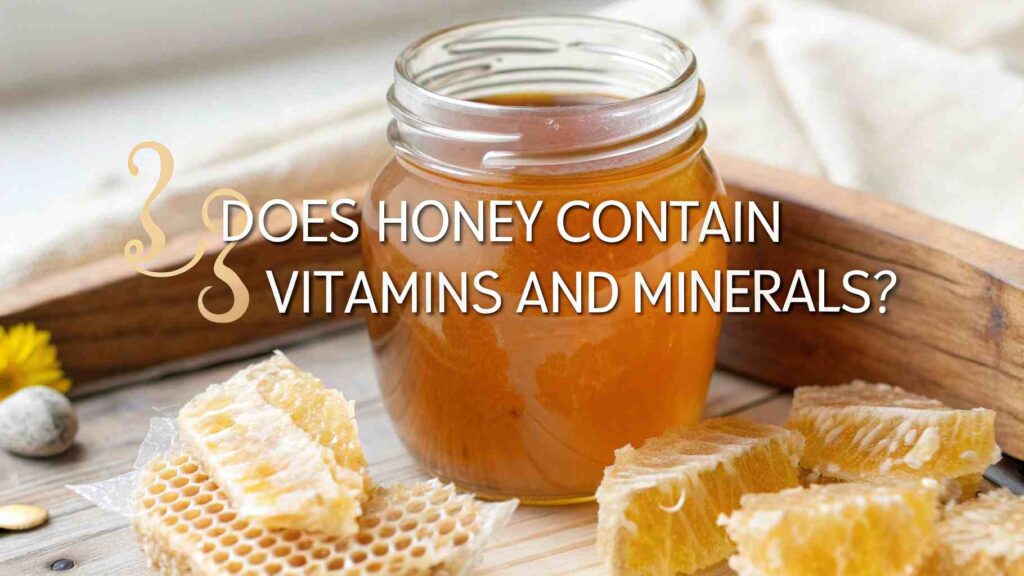
Although the label may show 0% daily value for most nutrients honey contains trace amounts of beneficial compounds:
- Vitamin C
- B Vitamins (like niacin, riboflavin)
- Calcium, Magnesium and Iron
These amounts are not significant enough to meet your daily needs but they add a nutritional edge compared to processed sugar.
Honey’s Glycemic Index (GI): How Fast Does It Affect Blood Sugar?
The Glycemic Index (GI) of honey ranges from 35 to 58 depending on the floral source. This means it can have a moderate impact on blood sugar levels especially compared to regular sugar which has a GI of around 65.
Tip: If you are managing diabetes or insulin sensitivity opt for lower GI varieties of honey such as acacia honey.
Honey vs. Other Sweeteners: Nutrition Comparison
| Sweetener | Calories (1 tbsp) | Sugar (g) | Glycemic Index |
| Honey | 64 kcal | 17g | 35 to 58 |
| Table Sugar | 49 kcal | 13g | 65 |
| Maple Syrup | 52 kcal | 12g | 54 |
| Agave Syrup | 60 kcal | 16g | 10 to 19 |
| Stevia (natural) | 0 kcal | 0g | 0 |
While honey is slightly higher in calories. Its antioxidant content, enzymes and natural compounds make it a healthier choice in moderation.
Types of Honey & Their Nutritional Edge
Did you know not all honey is created equal? The type of flower nectar used by bees affects the flavor, color and nutritional profile.
Raw Honey
- Unfiltered, unheated
- Retains enzymes and nutrients
- Best for health benefits
Manuka Honey
- From New Zealand
- Rich in methylglyoxal (MGO) which gives it unique antibacterial properties
- Often used for wound healing and immunity
Clover Honey
- Most common in stores
- Light flavor moderate antioxidant level
Buckwheat Honey
- Dark and strong flavor
- Highest antioxidant levels among all types
Acacia Honey
- Very light and floral
- Low glycemic index
Does Honey Go Bad? Storage & Shelf Life Tips?
Pure honey never spoils if stored correctly. It may crystallize but that does not mean It is gone bad.
Storage Tips:
- Keep in a tightly sealed container
- Store in a cool dry place (not the fridge)
- To liquefy crystallized honey place the jar in warm water (not boiling)
Fun Facts About Honey (You Might Not Know)
- Bees must visit 2 million flowers to make 1 pound of honey.
- Honey was found in Egyptian tombs and is still edible.
- It is the only food that contains all the substances needed to sustain life including enzymes, vitamins and minerals.
Who Should Avoid Honey?
- Infants under 1 year old Risk of botulism.
- People with severe insulin resistance or allergies to bee products.
- Vegans Some avoid honey due to its animal origin.
FAQ’s
1. What are the nutrition facts for honey?
1 tablespoon (21g) of honey has about 64 calories, 17g of sugar, 0g fat and 0g protein. It also contains small amounts of minerals like iron and potassium.
2. Does honey need a nutritional label?
Yes, in most countries packaged honey must include a nutritional label showing calories, sugars and other details to help people understand what they are eating.
3. What information is on the label of honey?
A honey label usually shows:
- Calories
- Total sugar
- Serving size
- Ingredients (should be 100% honey)
- Sometimes origin and whether it is raw or organic
4. What is the nutritional value of 100g of honey?
Per 100g of honey you get:
- 304 calories
- 82g of sugar
- 0g fat
- 0.3g protein
- Small amounts of calcium, iron and potassium
5. Is honey 100% healthy?
Honey is natural and healthier than refined sugar but it is still high in sugar. So, it is healthy in small amounts but not if overused.
6. Is 100g of honey a day too much?
Yes, 100g a day is too much for most people. That is over 3 times the daily sugar limit for adults. Try to keep it to 1 to 2 tablespoons a day.
Conclusion:
Honey is a sweet and natural treat, packed with energy and health benefits. But like all good things. It is best enjoyed in moderation. Always check the label to know what you are eating. Stay tuned with us as we explore more about honey and its amazing uses in daily life.