Wasabi Peas Nutrition Facts: Wasabi peas are crunchy green peas with a spicy coating. They give you protein, fiber and some vitamins but it is best to eat them in small amounts because they can be high in salt.
Stay tuned with us. We will soon talk about more yummy and healthy snacks like roasted chickpeas, kale chips and edamame that you will love to try.
What Are Wasabi Peas?
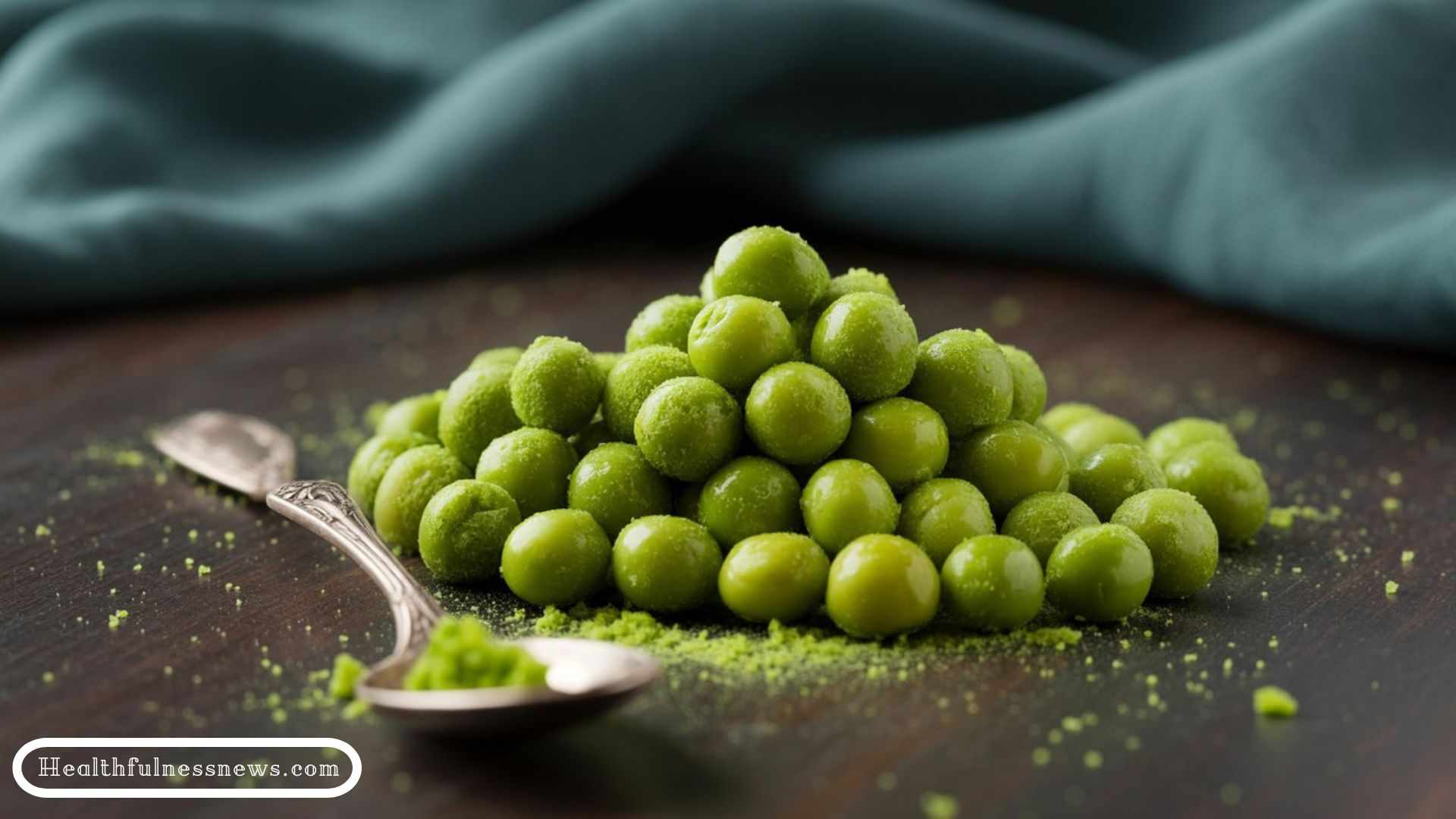
Wasabi peas are roasted green peas coated with a spicy wasabi flavored mixture. The coating usually includes starch, sugar, salt, mustard and wasabi powder giving them that unforgettable burn that clears your sinuses in seconds.
They are often eaten as a crunchy snack or used to add texture and flavor to salads or trail mixes.
Wasabi Peas Nutrition Facts (Per 1 oz / 28g Serving)
Here is the average nutrition breakdown based on several popular brands:
| Nutrient | Amount per 1 oz (28g) | % Daily Value (DV) |
| Calories | 120 to 130 kcal | — |
| Total Fat | 4 to 5 g | 6% |
| Saturated Fat | 0.5g | 3% |
| Carbohydrates | 17 to 18 g | 6% |
| Dietary Fiber | 2 to 3g | 10% |
| Total Sugars | 2 to 4g | — |
| Protein | 4 to 5g | 10% |
| Sodium | 150 to 200mg | 8% |
| Iron | 4% DV | — |
| Potassium | 3% DV | — |
| Calcium | 1% DV | — |
Nutrient values can vary slightly depending on the brand, oil type and seasoning used.
Detailed Breakdown of Nutrients
Calories and Energy
At about 130 calories per serving, wasabi peas are a moderate-calorie snack that provides quick energy. Most calories come from carbohydrates and fat, making them suitable for active individuals who need an energy boost during the day.
Protein Power
Each serving provides around 5 grams of plant-based protein — a decent amount for a crunchy snack. This makes wasabi peas an excellent choice for vegetarians or vegans seeking more protein sources.
Healthy Carbs and Fiber
With nearly 3 grams of fiber, wasabi peas support digestion, promote satiety, and help regulate blood sugar levels. Unlike empty-calorie snacks like chips, the fiber in peas helps you stay full longer.
Fats
Most fats in wasabi peas are unsaturated, meaning they can contribute to heart health when consumed moderately. The small amount of saturated fat comes from oil used during roasting or frying.
Micronutrients
Wasabi peas contain small amounts of iron, potassium, calcium, and magnesium, all of which support blood health and muscle function.
Health Benefits of Wasabi Peas
Wasabi peas may be small, but they come with several nutritional advantages when eaten in moderation.
Rich in Plant-Based Protein
They provide protein for tissue repair and muscle maintenance, especially useful for those on vegetarian or vegan diets.
Supports Digestive Health
The dietary fiber found in peas aids digestion, supports gut health, and prevents constipation.
Boosts Energy Levels
The carbohydrates in wasabi peas act as quick fuel for your body — ideal for busy workdays or physical activity.
May Support Heart Health
Their unsaturated fats, coupled with fiber, may help reduce bad cholesterol (LDL) levels when part of a balanced diet.
Contains Antioxidants
Green peas are a good source of antioxidants like polyphenols, which help protect your cells from free radical damage.
Are Wasabi Peas Good for Weight Loss?
In moderation — yes!
Wasabi peas are fiber and protein-rich, helping control hunger and reduce mindless snacking. However, because they’re also calorie-dense and salty, overindulging can lead to weight gain or water retention.
Tip: Limit portions to about ¼ cup (28g) and pair them with fresh fruits or vegetables for a balanced snack.
Wasabi Peas vs. Other Snacks
| Snack Type | Calories (1 oz) | Protein (g) | Fiber (g) | Sodium (mg) | Verdict |
| Wasabi Peas | 130 | 5 | 3 | 200 | Good source of protein and fiber: watch sodium |
| Potato Chips | 150 | 2 | 1 | 170 | Higher fat, lower nutrition |
| Pretzels | 110 | 2 | 1 | 350 | High sodium, low nutrients |
| Almonds | 160 | 6 | 3 | 0 | High in good fats, nutrient-dense |
Wasabi peas offer a healthier crunch than most processed snacks but can’t compete with raw nuts or fresh vegetables for nutrient density.
Smart Ways to Enjoy Wasabi Peas
If you love their flavor but want to eat them mindfully try these ideas:
- Snack in Small Portions: Measure out a serving instead of eating from the bag.
- Add to Trail Mix: Combine with almonds, cashews, and dried cranberries for a balanced mix.
- Sprinkle on Salads: Adds crunch and spice to plain greens.
- Top Rice or Stir-Fry Bowls: Gives an extra burst of flavor.
- Crush and Use as Garnish: Use crushed wasabi peas as a coating for sushi rolls or fish dishes.
Fun Facts About Wasabi Peas
- Not Real Wasabi: Most wasabi peas use horseradish powder and mustard as substitutes.
- Natural Pain Relief: Wasabi contains compounds like allyl isothiocyanate, which trigger pain receptors (that “nose burn”), but can also have mild anti-inflammatory effects.
- Popular in Japan and Beyond: While inspired by Japanese flavors, wasabi peas are actually more popular in Western countries as a packaged snack.
Buying and Storage Tips
When shopping for wasabi peas, consider the following:
- Check the Ingredients: Choose versions made with real peas and minimal additives.
- Look for Lower Sodium: Brands offering under 150 mg sodium per serving are ideal.
- Avoid Artificial Dyes: Opt for natural coloring from spinach or green tea extract.
- Store Properly: Keep them in airtight containers to maintain crispiness and prevent moisture buildup.
Homemade Wasabi Peas Recipe
Want a healthier version without all the extra salt and sugar? Try making them at home!
Ingredients:
- 1 cup dried green peas
- 1 tbsp olive oil
- 1 tbsp wasabi powder
- 1 tsp rice vinegar
- ½ tsp sugar
- Pinch of salt
Instructions:
- Soak peas overnight, then drain and pat dry.
- Preheat the oven to 375°F (190°C).
- Toss peas in oil, vinegar, and seasonings.
- Bake on a parchment-lined sheet for 35 to 40 minutes, stirring occasionally.
- Let cool completely for that perfect crunch.
Homemade wasabi peas are lower in sodium and contain no artificial flavoring, a great way to enjoy guilt-free snacking.
Nutritional Comparison: Homemade vs. Store-Bought
| Type | Calories | Sodium | Additives | Crunch |
| Homemade | 110 kcal | 80 mg | None | Crisp, fresh |
| Store-Bought | 130 kcal | 200 mg+ | Often artificial | Extra crispy |
Homemade options clearly win in health and freshness though store-bought ones may have a longer shelf life and stronger flavor.
FAQ’s
1. Are wasabi peas healthy for you?
Yes, wasabi peas can be healthy when eaten in small amounts. They have protein, fiber, and some vitamins, but too much can increase salt and calorie intake.
2. Are wasabi peas better for you than chips?
Yes, wasabi peas are usually better than chips because they have more protein and fiber. However, chips have less sodium sometimes, so balance is key.
3. Do wasabi peas contain a lot of sugar?
No, wasabi peas have very little sugar — around 1 to 2 grams per serving. But always check the label because some brands add extra sugar.
4. How many wasabi peas should you eat a day?
You can eat a small handful (about 1 ounce or 28 grams) per day as a snack. Eating more may cause high sodium or stomach irritation.
5. Are wasabi peas anti-inflammatory?
Yes, wasabi has natural anti-inflammatory properties that may help reduce inflammation in the body when eaten moderately.
6. Is wasabi good for your liver?
Yes, natural wasabi may support liver health because it contains antioxidants that help the body remove toxins.
7. Who should not eat wasabi?
People with stomach ulcers, acid reflux, or digestive problems should avoid wasabi because it can cause irritation.
8. What does wasabi do to your stomach?
Wasabi can irritate the stomach if eaten too much. It may cause a burning feeling or discomfort in sensitive people.
9. Is wasabi a superfood?
Not officially, but wasabi has strong antioxidants and nutrients that make it a very healthy spice option.
10. Is wasabi good for hair growth?
Some studies show wasabi extract may help with hair growth, but more research is needed to confirm it.
11. Are horseradish and wasabi the same?
No, they are not the same. Real wasabi comes from a Japanese plant, while most products use horseradish mixed with mustard and green coloring.
12. Does wasabi clear sinuses?
Yes! Wasabi can temporarily open and clear sinuses because of its strong fumes, helping you breathe better for a short time.
Conclusion:
In short, wasabi peas are a crunchy and spicy snack that offers protein, fiber, and vitamins. They can be healthy when eaten in small amounts. Just enjoy them wisely to balance taste and nutrition. Perfect for a light snack or a quick energy boost anytime.
For More Knowledge Visit My Website.