T
The decision to try dermal fillers or Botox for the first time is a personal one, and it usually comes after months of quiet research. You have probably scrolled through before-and-after photos, read conflicting information online, and wondered whether the results will actually look natural or whether you will end up looking obviously “done.”
These concerns are valid, and the good news is that modern aesthetic treatments, when performed by a qualified provider, produce subtle and natural results that enhance your features rather than changing them. The industry has moved far beyond the overfilled looks that dominated social media a few years ago. Today’s approach is about restoring balance, enhancing what you already have, and making subtle improvements that people notice without being able to pinpoint why you look refreshed.
The key is going in informed. Understanding how these treatments work, what the process involves, and how to evaluate a provider will help you feel confident and get the outcome you want.
Understanding the Difference Between Botox and Fillers
These two treatments are often mentioned together, but they work in completely different ways and address different concerns. Knowing the distinction helps you communicate your goals to your provider and set realistic expectations.
Botox is a neuromodulator. It temporarily relaxes the muscles that create dynamic wrinkles, the lines that form when you make facial expressions like frowning, squinting, or raising your eyebrows. The most common treatment areas are the forehead, the area between the eyebrows known as the glabella, and the crow’s feet around the eyes. Results typically appear within 3 to 7 days and last 3 to 4 months before the muscle activity gradually returns. Botox is preventative as well as corrective, starting treatments before deep lines are established can prevent them from forming permanently.
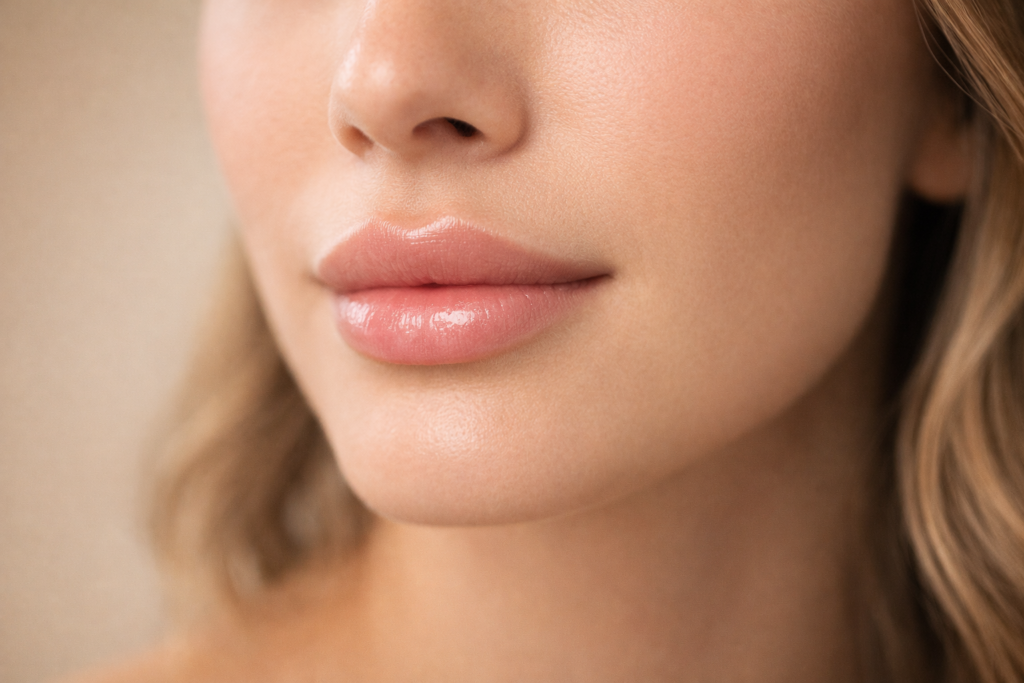
Dermal fillers are gel-like substances, most commonly made from hyaluronic acid, that are injected beneath the skin to add volume, smooth lines, or enhance contours. Fillers are used for lip enhancement, cheek augmentation, nasolabial fold reduction, jawline definition, under-eye hollowness, and chin projection. Results are visible immediately and typically last 6 to 18 months depending on the product and the treatment area. Different filler products have different densities and are designed for specific areas, a skilled injector knows which product to use where.
The simplest way to remember the distinction: Botox relaxes muscles to reduce lines. Fillers add volume to restore or enhance shape. Many patients benefit from both, and a good provider will recommend the right combination based on your facial anatomy and goals.
How to Choose a Safe and Qualified Provider
This is the most important decision you will make in the entire process. The skill and experience of your injector matters far more than the brand of filler being used or the price of the treatment.
Start by verifying credentials. Your injector should be a licensed medical professional, a physician, nurse practitioner, or physician assistant, with specific training in aesthetic injectables. Board certifications, advanced training certificates, and membership in professional organizations are all positive indicators. Ask about their experience, how many procedures they perform monthly, and whether they have before-and-after photos from their own patients rather than stock images.
A consultation-first approach is a strong positive signal. Any provider who wants to inject you during your first visit without a thorough conversation about your goals, medical history, and expectations is cutting corners. A proper consultation includes a facial assessment, a discussion of what is realistic given your anatomy, honest advice about what you do and do not need, and a clear explanation of costs and aftercare.
The environment matters too. A medspa should feel like a medical facility, clean, organized, and professional. Products should be FDA-approved and sourced from authorized distributors. Evollon Medspa & Wellness in Forest Hills, Queens exemplifies this standard, offering complimentary consultations with experienced professionals in a clinical yet welcoming setting that prioritizes safety and natural results.
Avoid deals that seem too good to be true. Discount fillers from unverified sources carry serious health risks including infection, vascular occlusion, tissue death, and permanent disfigurement. This is a medical procedure, not a commodity, and the lowest price is rarely the safest choice. Counterfeit and diluted products are a real problem in the aesthetic industry, and the consequences of receiving them can be devastating.
What to Expect During Your First Appointment
Knowing the process removes anxiety and helps you feel in control of the experience.
The appointment begins with a consultation where you discuss your goals and concerns openly. Your provider examines your facial structure, skin quality, symmetry, and the specific areas you want to address. For lip fillers, this might mean recommending a conservative half syringe for a first-time patient to achieve a subtle enhancement that can be built upon later. For Botox, your provider will ask you to make various facial expressions to identify which muscles are creating the lines you want to soften.
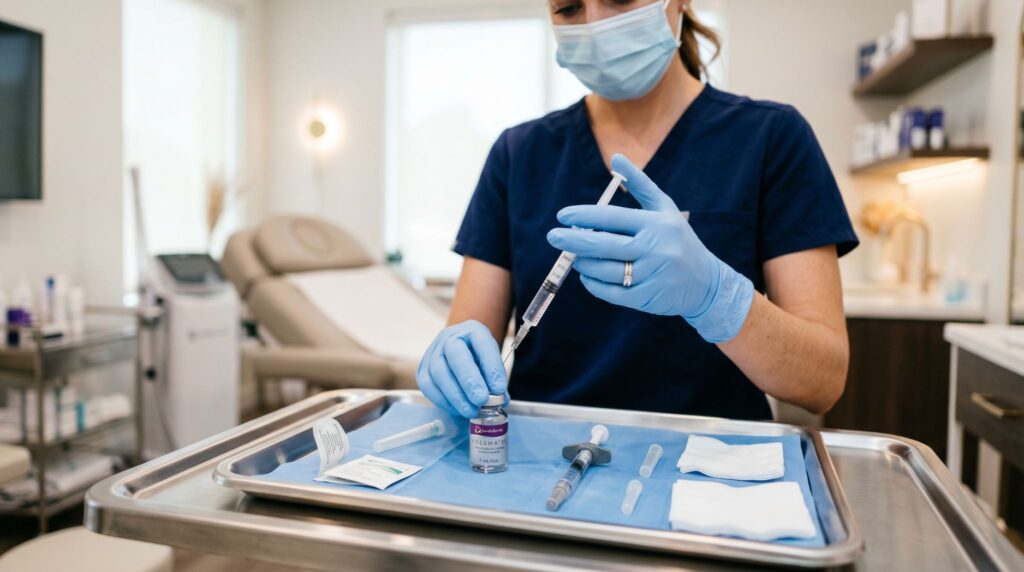
Before the injection, a topical numbing cream is applied to minimize discomfort. This is left on for 15 to 20 minutes while it takes effect. Most modern fillers also contain lidocaine, a local anesthetic, which further reduces sensation during the procedure. The actual injection process takes 15 to 30 minutes depending on the treatment area and the number of injection points.
You may experience mild swelling, tenderness, or bruising at the injection sites for 24 to 72 hours afterward. These side effects are normal and resolve on their own. Swelling is typically more noticeable with lip fillers than with other areas. Your provider will give you specific aftercare instructions, which typically include avoiding intense exercise, excessive heat, saunas, alcohol, and blood-thinning supplements for the first 24 to 48 hours.
Final results are visible once any swelling subsides, usually within 5 to 7 days for fillers and 10 to 14 days for Botox. A follow-up appointment is often scheduled two weeks after treatment to assess the results and determine if any touch-up is needed.
If you want to see what other patients in the Queens area think about their experiences, checking the Google Maps reviews and location is a helpful way to evaluate a provider before booking your consultation.
Managing Expectations and Getting Natural Results
The fear of looking overdone is the number one concern among first-time patients, and it is entirely within your control when you take the right approach.
The most effective strategy is to start conservatively. A skilled injector will recommend less product for your first treatment and build gradually over subsequent sessions. It is always easier to add more filler at a follow-up than to correct an overfill. The best results come from patience and incremental adjustments rather than trying to achieve a dramatic change in one session.
Communicate clearly about what you want and, equally important, what you do not want. Bring reference photos that represent the look you are going for. Be specific about what you like and what you want to avoid. Phrases like “I want my lips to look fuller but still like my lips” or “I want to soften these lines but still be able to show expression” give your provider a clear target to work toward.
Trust your provider’s expertise when they push back. A good injector will tell you if what you are asking for will not look natural on your face. They understand facial proportions, golden ratios, and the relationship between different facial features. A provider who agrees to everything you ask for without offering their professional opinion is not serving your best interests.
Remember that aesthetic treatments are not permanent. Hyaluronic acid fillers can be dissolved with an enzyme called hyaluronidase if you are unhappy with the result. Botox wears off naturally within 3 to 4 months. This reversibility is one of the primary reasons injectables have become so popular, the commitment level is low compared to surgical alternatives, and adjustments can be made over time.
Beyond Injectables: Other Treatments Worth Knowing About
Fillers and Botox are the most well-known medspa treatments, but they are part of a broader range of aesthetic and wellness services that are worth understanding.
PRP therapy uses your own blood’s growth factors to stimulate collagen production in the skin or hair regrowth in the scalp. It is a natural, non-chemical approach that has gained significant popularity for both facial rejuvenation and hair loss treatment.
IV drip therapy delivers vitamins, minerals, and hydration directly into your bloodstream for faster absorption than oral supplements. Patients use it for energy, immune support, skin health, workout recovery, jet lag, and general wellness.
Chemical peels and medical-grade skincare treatments address concerns like uneven skin tone, acne scarring, hyperpigmentation, and texture issues. These treatments complement injectables by improving the quality of the skin itself rather than just the volume and contour underneath.
Understanding the full range of options helps you build a comprehensive approach to your aesthetic goals rather than viewing each treatment in isolation.
Frequently Asked Questions
Do lip fillers hurt?
Most patients describe the sensation as mild pressure or a slight pinch. Topical numbing cream is applied before the procedure, and the filler itself contains a local anesthetic. Discomfort is minimal and the entire process takes about 15 to 20 minutes. Pain tolerance varies, but the vast majority of patients say it was much easier than they anticipated.
How long do results last?
Botox results typically last 3 to 4 months. Lip fillers last 6 to 12 months, and other dermal fillers can last up to 18 months depending on the product and treatment area. Individual metabolism, activity level, and the specific area treated all affect how quickly the body breaks down the product. Regular maintenance appointments keep results consistent.
Can I go back to work after getting fillers?
Yes. Most patients return to normal activities immediately. You may have mild swelling or redness at the injection sites, but this is usually minor enough to be covered with makeup after a few hours. More noticeable bruising, if it occurs, typically fades within 3 to 5 days. Many patients schedule their appointments during lunch breaks or after work.
What if I do not like the results?
Hyaluronic acid fillers can be dissolved with an enzyme injection called hyaluronidase, usually within 24 to 48 hours. This provides a safety net for first-time patients. Botox is not reversible through injection but wears off naturally within a few months. Starting with conservative amounts minimizes the risk of an unsatisfactory result.
How much do fillers cost in Queens NY?
Pricing varies by provider, product, and the amount used. Lip fillers typically cost between $500 and $900 per syringe, and most first-time patients need one syringe. Botox is usually priced per unit, with most treatments requiring 20 to 60 units. A transparent provider will give you exact pricing during your consultation with no hidden fees or surprise charges.